















The Scaling Experts | Small Business Growth O/S

Call Us at (619) SCALE06 9am-6pm CT

Portfolio Performance Improvement for Private Equity, Venture Capital and Family Offices

Strengthen portfolio leadership before execution gaps become missed milestones, forced CEO replacements or write-offs.

Operating support to diagnose growth constraints, develop management teams and install the systems required to deliver the investment thesis.

Operating Support for Higher Portfolio Yield

In a market where leverage and multiple expansion cannot carry every investment, more of the return must come from operational value creation. That requires portfolio-company leaders who can translate the investment thesis into priorities, build management depth, identify slippage early and execute at the pace expected by private capital.

AirTight works with private equity firms, venture investors, independent sponsors, family offices and portfolio-company boards as a flexible operating resource. We combine rapid diagnosis, founder and CEO development, fractional COO execution, manager training and six integrated management systems.

The work can begin during diligence, in the first 100 days, at a stalled growth milestone, during a founder transition or when an operating partner needs more implementation capacity inside the company.

  • Protect the thesis: expose leadership, talent and operating-system gaps before they consume another year of the hold period.
  • Preserve founder value: help capable founders change roles and leadership style without losing their relationships, knowledge or entrepreneurial advantage.
  • Increase execution capacity: install the management cadence, KPIs, decision rights and cross-functional systems needed for the next revenue stage.
  • Create portfolio leverage: reuse proven tools, training and operating language across several companies without forcing an identical strategy on each business.
Dark picture with two lage arrows pointing up

Our Goal for Every Portfolio Company

  • Improve revenue quality and the sustainable growth rate through clearer positioning, stronger client economics and repeatable commercial execution.
  • Expand operating leverage, EBITDA quality and cash conversion by installing management discipline, better forecasting and scalable processes.
  • Improve exit readiness and the valuation multiple by reducing founder dependence, strengthening the leadership bench and creating institutional operating visibility.

Enterprise value can improve significantly when several of these levers move together—but the timing and magnitude depend on the company, market, competitive advantage and execution.

AirTight establishes company-specific targets after the diagnostic rather than promising a generic multiple or growth rate before the constraints are understood.

Founder Transition Risk Is Portfolio Performance Risk

Founders often excel at seeing an opportunity, winning early clients, building a product and attracting capital. The leadership style that creates the company, however, is rarely the same style required to build a professionally managed organization. When the founder does not make that transition, missed milestones, management turnover and cash burn can quickly threaten the investment thesis.

The investor’s choice need not be binary: leave the founder unchanged or replace the founder. A disciplined operating assessment can determine whether the leader should be developed, supplemented with experienced executives, moved into a better-fit role or replaced before enterprise value deteriorates.

CEO turnover is already common: McKinsey reported in 2026 that 60% to 70% of PE-backed companies experience a CEO change during ownership, often in the first few years, and more than 60% of replacement leaders are first-time CEOs.

The leadership-capacity gap is large: In a separate 2026 value-creation study, 94% of sponsors said portfolio-company leadership drives value creation, yet only 8% reported investing systematically in building that leadership capacity.

McKinsey Global Private Equity Report 2026 | McKinsey on PE value creation and transformation leadership

Use the Five Stages to Intervene Before Performance Breaks

Every revenue stage changes the founder’s job, the management system and the investor’s risk. AirTight uses a five-stage model to diagnose the specific transition a portfolio company must make next.

  1. Stage 1 — Validation / Pre-Revenue: Prove the problem, solution, market and willingness to pay. The primary risks are premature scaling, unclear ownership and confusing activity with validation.
  2. Stage 2 — Repeatability / Early Revenue: Turn founder-led selling and delivery into repeatable client acquisition, fulfillment and cash-management processes. Install the first accountable managers and operating metrics.
  3. Stage 3 — Professionalization / $1M to $10M: The founder must delegate decisions, build a real leadership team and replace informal coordination with priorities, budgets, KPIs, management cadence and functional accountability.
  4. Stage 4 — Scale / $10M to $50M: Add experienced executives, cross-functional systems, stronger financial visibility, management depth and governance capable of supporting faster growth without losing quality or culture.
  5. Stage 5 — Enterprise / $50M+: Institutionalize strategy, succession, portfolio management, M&A integration and second-generation leadership so value no longer depends on one founder or rainmaker.

At each transition, the founder and management team must change how they lead. The right intervention may be executive development, a fractional COO or transformation leader, a stronger functional executive, a redesigned role for the founder, or a planned CEO succession. Earlier diagnosis preserves more options and more enterprise value.

Family Offices Are Becoming a Major Source of Patient Private Capital

Family offices are an increasingly important force in private markets, direct investing and long-duration ownership. Many bring operating experience and patient capital, but they may not maintain a large internal portfolio-operations team across every industry and growth stage.

  • 8,030 single family offices worldwide: Deloitte estimated that total in its 2024 landscape study, up 31% from 6,130 in 2019, with 10,720 projected by 2030.
  • $3.1 trillion in family-office assets under management: Deloitte projected that total to reach $5.4 trillion by 2030, a 73% increase.
  • 3,180 are in North America: the largest regional concentration in Deloitte’s estimate.
  • Operating businesses remain central: UBS’s 2026 survey covered 307 family offices across more than 30 markets. Participating families averaged $2.7 billion in net worth, their offices managed an average of $1.3 billion, and 77% still had an active operating business.

Deloitte, Defining the Family Office Landscape | UBS Global Family Office Report 2026

Where AirTight fits

AirTight can serve as a scalable operating resource for private equity firms, venture investors, independent sponsors and family offices—from leadership and operating-system diligence through the first 100 days, founder development, execution recovery and portfolio-wide management standards. The goal is to strengthen the company around the founder whenever possible and make a leadership change only when the investment thesis truly requires it.

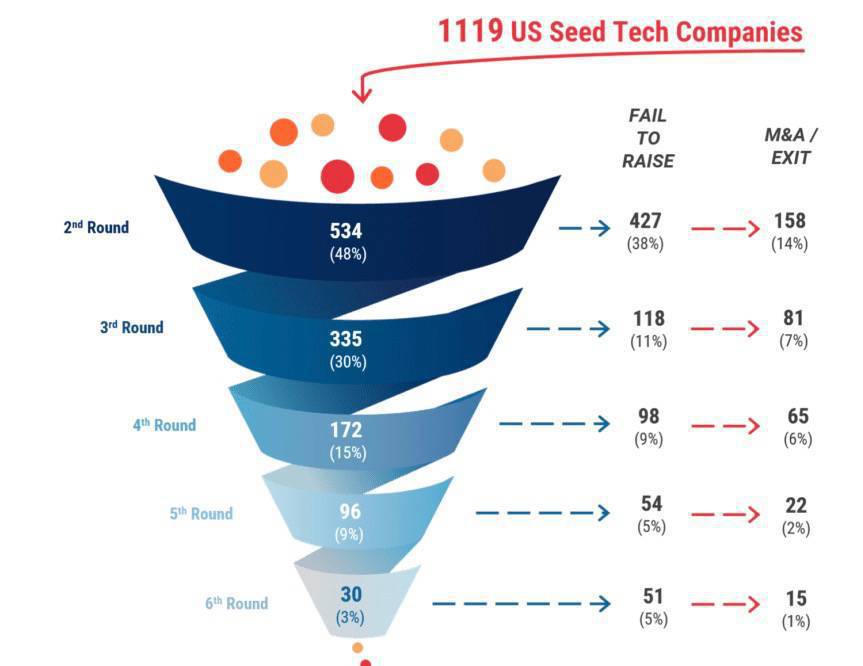
Inforgraphic showing the percentage of companies that get second, third , fourth and fifth round funding after getting an investment of venture capital
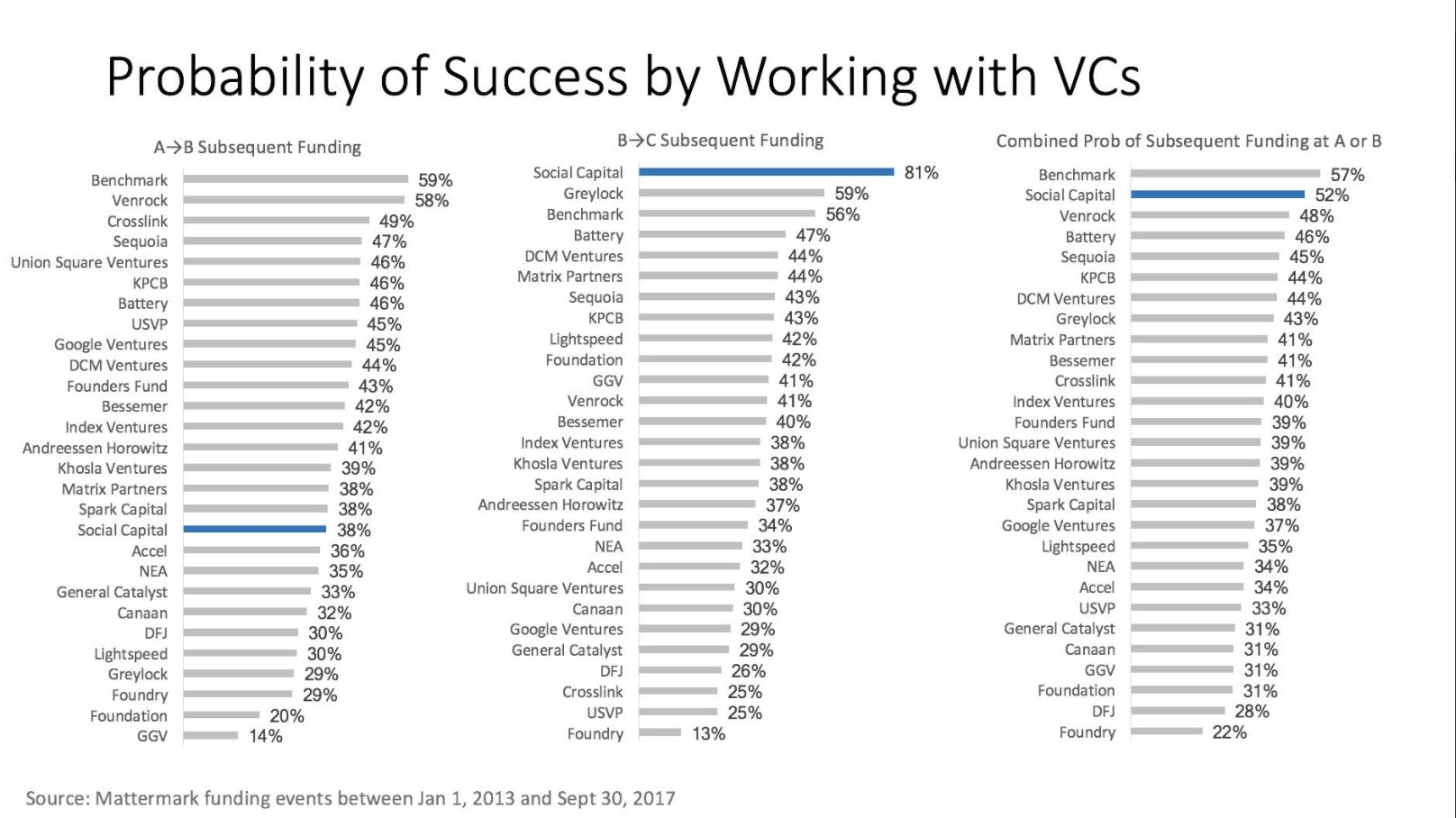
Averages Change Every Year But Failure Rates Are Always High. See Statistics for the Best Firms at Page Bottom. We help institutional investors have more winners.

Portfolio Characteristics That Create Operating Leverage

AirTight’s management framework is industry-agnostic. The specific value-creation plan should reflect the economics and strategic advantages of each portfolio company rather than applying a software playbook to every investment.

  1. Recurring or highly repeatable revenue: subscription, contractual, maintenance, managed-service or repeat-purchase models improve forecasting and client lifetime value.
  2. Pricing power and differentiated expertise: intellectual property, specialized knowledge, brand, regulatory position, proprietary data or switching costs can support stronger margins.
  3. Scalable delivery: software, standardized services, process automation, training and technology can reduce the marginal cost of growth.
  4. Client concentration and cross-selling opportunity: deeper relationships, broader service lines and systematic account development can increase revenue quality while reducing acquisition cost.
  5. Fragmented markets: a disciplined platform can combine organic improvement with add-on acquisitions, shared services and stronger management systems.
  6. Data and AI enablement: better information can improve pricing, forecasting, productivity, client experience and decision quality—when embedded in operating processes rather than treated as an isolated technology project.

The operating plan should amplify the advantages already present and correct the leadership or management constraints preventing the company from converting them into cash flow and enterprise value.


“The challenge of scaling is mastering the art of letting go—delegate, trust, and empower your team.”
Jeff Bezos, Founder of Amazon

* * *  

“To scale successfully, you need to be willing to embrace change and reinvent your business constantly.”
Howard Schultz, Former CEO of Starbucks

* * *


“If you want to create a great product, just focus on one person. Make that one person have the most amazing experience ever”  – Brian Chesky, Co-founder of Airbnb

* * *

“I think it’s very important to have a feedback loop, where you’re constantly thinking about what you’ve done and how you could be doing it better.”   – Elon Musk

All these principles and hundreds more are baked into our systems.

A Portfolio Operations Resource That Works With the Deal Team

Investors do not need another generic strategy report. They need a repeatable way to determine what is limiting performance, whether the leadership team can execute the value-creation plan and what intervention will produce the fastest risk-adjusted improvement.

  • Leadership and operating-system diligence: Assess the founder, executive team, management depth, decision rights, KPIs, planning cadence, talent systems and execution capacity before or immediately after investment.
  • First-100-day operating plan: Translate the investment thesis into sequenced priorities, accountable owners, measurable milestones and a management rhythm that exposes slippage early.
  • Founder and CEO development: Help capable founders change roles and leadership style as the company moves from entrepreneurial improvisation to professional management.
  • Portfolio-company execution support: Provide fractional COO, transformation-leadership and executive-coaching capacity when the company needs more than occasional operating-partner attention but does not require another full-time executive.
  • Execution recovery: Diagnose stalled growth, weak product-market fit, margin compression, cash pressure, missed integrations or team dysfunction before another funding round is consumed.
  • Portfolio-wide management standards: Apply common operating language, dashboards, leadership practices and training while preserving the strategy and culture appropriate to each company.

A practical engagement sequence

  1. Diagnose in one to two days: Identify the few constraints most responsible for missed milestones and determine whether the issue is strategy, leadership, talent, process, market or capitalization.
  2. Prescribe the intervention: Define the founder’s best-fit role, the management upgrades required and the operating systems needed for the next revenue stage.
  3. Install and execute: Work with the CEO, management team, board and operating partners through a focused 90- to 120-day implementation or a longer fractional operating engagement.
  4. Transfer capability: Develop managers into executives so the company can sustain the operating cadence without permanent dependence on outside consultants.

Portfolio-level outcomes

  • Faster visibility into red, yellow and green portfolio-company risks.
  • Better milestone attainment, financial reporting and accountability.
  • Greater management depth and clearer founder succession options.
  • More consistent growth, margin, cash-conversion and client-retention execution.
  • Lower risk of a late, disruptive CEO replacement.
  • Stronger exit readiness and a more credible institutional operating story for the next buyer.

Growth targets must reflect the company’s competitive advantage, market, unit economics and starting point. For an organic B2B services company, 20% to 30% CAGR can be an ambitious target; materially higher growth generally requires a defensible competitive advantage, acquisitions or both.

AirTight can structure the work as a rapid diagnostic, a targeted system installation, fractional operating support or a portfolio-wide leadership-development program. Performance incentives or equity alignment can be negotiated around specific milestones where appropriate.

Call (619) SCALE06 or schedule a Zoom discussion about one company or the portfolio.

COMMON PORTFOLIO INTERVENTION SCENARIOS

The Company Has Not Proven Repeatable Product-Market Fit

Revenue has stalled, sales cycles keep lengthening or new capital is funding experimentation rather than repeatability. AirTight separates market, positioning, offer, pricing, channel and execution problems, then defines the shortest evidence-based path to traction. The objective is an early decision: refine, reposition, acquire a missing capability, pursue a strategic combination or stop investing before losses compound.

The Founder Is Not Making the Next-Stage Leadership Shift

The founder remains the chief salesperson, product authority, decision bottleneck and culture carrier while the company now needs an executive team and operating cadence. We assess willingness, capability and role fit; coach the leadership transition; install delegation and accountability systems; and supplement the founder with experienced operating talent. If the transition still cannot occur, the board has better evidence and a clearer succession plan before making a replacement.

The Investment Thesis Is Right, but the Management System Is Missing

The market opportunity may be attractive while forecasting, budgeting, hiring, KPI reviews, management development and cross-functional execution remain immature. AirTight installs the leadership infrastructure needed for the company’s current revenue stage, develops managers into executives and gives the board earlier visibility into whether the value-creation plan is truly on track.

Some Past Clients:

In this video our Founder, Bob Norton, discusses how AirTight Management’s proprietary framework takes the limiters off our client’s growth.  Guaranteed! We do everything needed with you in a program like no other on Earth.

A Portfolio Performance Partnership, Not Another Consulting Project

Engagements begin with a focused one- to two-day diagnostic and prescription. From there, AirTight can install the specific leadership and management systems required, support the CEO as a fractional COO or operating adviser, and provide managers with structured training, tools and coaching through the AirTight platform.

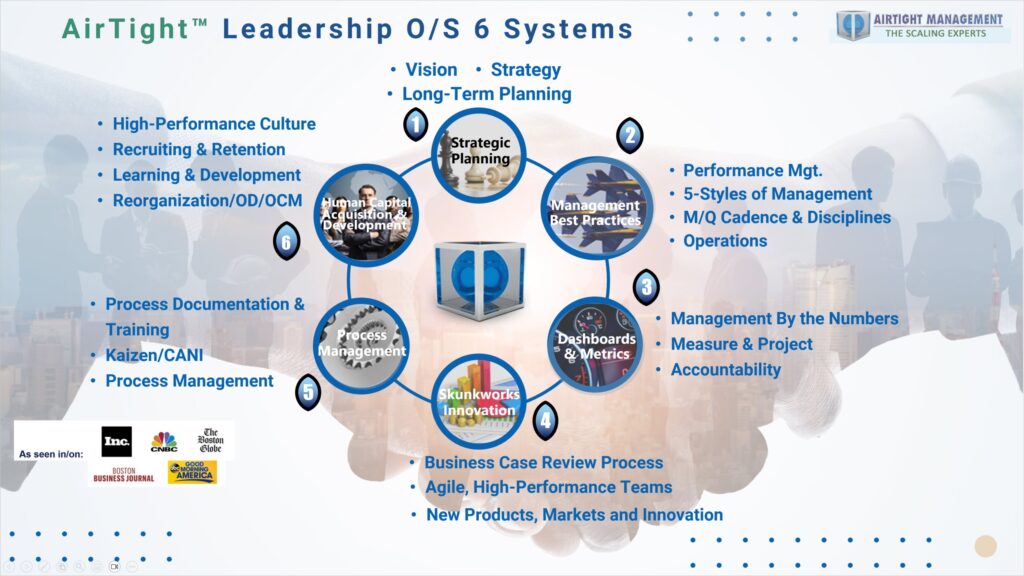
The broader program can include all six AirTight Systems—strategy and planning, marketing and sales, budgeting and financial management, process management, human capital and culture, and executive leadership—sequenced around the value-creation plan rather than installed as a generic package.

  • One portfolio company: diagnose and correct a specific growth, leadership or execution problem.
  • Several portfolio companies: create a shared management framework while tailoring the intervention to each company’s stage and thesis.
  • Founder-development track: develop capable founders and managers into next-stage executives before replacement becomes the only option.
  • Fractional operating support: provide more implementation capacity than periodic board or operating-partner involvement without immediately adding a full-time executive.

Results should be tied to milestones, not vague activity

Each engagement defines the company outcomes, management responsibilities, investor dependencies and decision deadlines in the contract. Where performance fees or equity are appropriate, vesting can be tied to agreed milestones rather than the passage of time. This protects the investor while ensuring that delays caused by missing data, capital decisions or incomplete management execution are handled explicitly.

The fee is typically comparable to limited fractional-COO capacity, while the engagement also includes AirTight’s intellectual property, training platform, implementation tools and decades of scaling experience.

AirTight 6 Systems Architecture Diagram
Each system is installed over 6 to 8 weeks and includes everything needed

Why the Integrated Model Matters

Training alone rarely changes management behavior. Coaching alone does not install the systems, decision rights and operating cadence required to execute a value-creation plan. Traditional consulting may identify the answer without creating adoption or accountability.

AirTight combines operating-system design, implementation, executive coaching, manager development, intellectual property and an online training platform. That integrated approach helps the portfolio company change how it operates—not merely understand what should change.

Any performance commitment is customized for a qualified portfolio company and documented with specific milestones, responsibilities, dependencies and decision deadlines.

Schedule a Portfolio Performance Diagnostic

Private equity and venture investors, family-office principals, independent sponsors, operating partners and portfolio-company boards can use an initial call to identify the most likely constraint in one company or across the portfolio.

We will discuss the investment thesis, current revenue stage, founder and management-team readiness, missed milestones, operating visibility and the intervention options available.

Call (619) SCALE06 or use the calendar below to schedule a Zoom discussion.

Bar charrt showing the percentage of companies with a successful exit after an investment by top venture capital firms like Benchmark Capital
Earlier intervention can turn potential write-offs into recoveries, profitable exits and—occasionally—portfolio-defining wins.
Talk With Bob's AI Clone